Athletic Training (B.S.) - Professional Practice Concentration

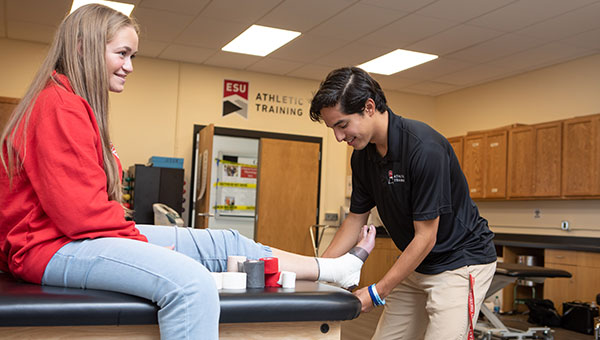
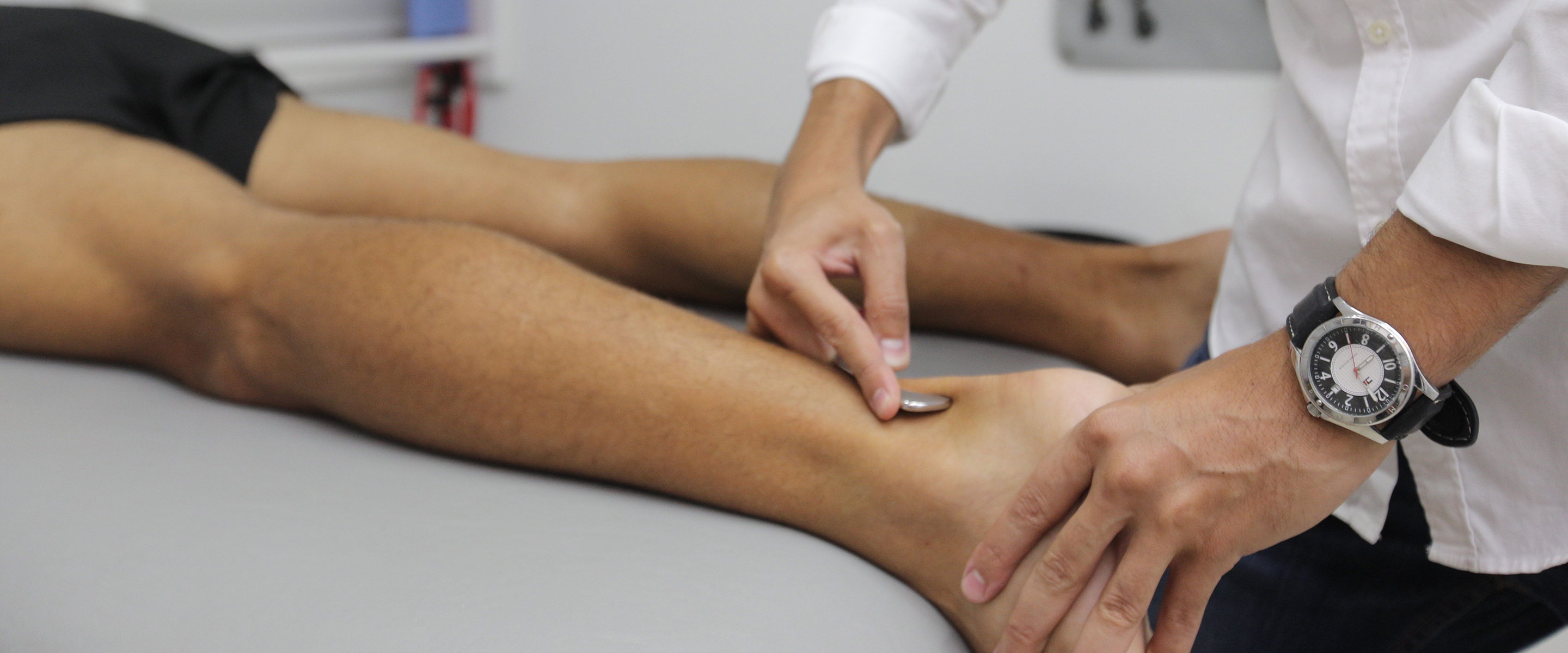
Athletic Trainer working on a patient

Athletic Training is an exciting allied health field which places the athletic trainer in a position of substantial challenge and responsibility. With the competencies and skills developed through education and experience, a certified athletic trainer is in a unique position.

He/she coordinates the athletic health care delivery system and makes it function smoothly. The athletic trainer directly provides athletic training services including injury prevention, injury evaluation, medical referral, emergency and follow-up care, and injury rehabilitation.


The Pre-Professional Rehabilitation Sciences program is NOT accredited by CaATe and does not lead to a pathway for credentialing as an athletic trainer.

The Pre-Professional Rehabilitation Sciences program is intended to prepare students for entry into professional programs in athletic training and the related rehabilitation sciences. Students will develop the knowledge, skills, and abilities to compete for entry into a variety of graduate programs in sports medicine and related disciplines.

Policies & Procedures

The expectations of today's athletic trainer are varied and complex. The care of the physically active must be entrusted only to those who have adequate preparation. Outside agencies at both the state and national levels have provided mandates for athletic training education programs such as ours. Accordingly, the Department of Athletic Training and the entire Warrior sports medicine staff is committed to excellence. Our basic objectives are to provide the student with a body of knowledge and a repertoire of practical skills which not only meet, but exceed, the state and national standards.

The Athletic Training Education Program is housed within ESU's College of Health Sciences. For decades, our school has enjoyed a position of national prominence and recognition. In large part, the success of this and other programs within the College of Health Science due to the strength of a faculty with professional expertise and genuine enthusiasm.

In Athletic Training, realize that your academic and laboratory experiences will include instruction from recognized experts in athletic training, exercise physiology, kinesiology and biomechanics, the psycho-social aspects of sport, management and administration, coaching, and medicine. In fact, the seven athletic trainers currently teaching in the ATEP bring over one hundred years of combined clinical experience in athletic training, sports medicine and physical therapy to the teaching/learning environment. Consider also that few institutions can provide a student with athletic training experience in a program which includes eighteen intercollegiate varsity sports for men and women and affiliation agreements with high schools, colleges and universities and sports medicine facilities within driving distance of the campus.

Program Outcomes

The Vision of the ESU Athletic Training Program is to be a leading student-centered athletic training program that offers distinct educational challenges to a diverse student body. Furthermore, students are afforded the opportunity to demonstrate entry-level competency as an athletic trainer while embracing the values of scholarship, professionalism, and inclusivity.

One measure of program effectiveness is postgraduate study and employability. Many ESU graduates are among the best clinicians, educators and researchers in the field. The ESU Athletic Training Program continues to place its students in many of the best graduate and professional programs as well as emerging and traditional practice settings.

Learning Outcomes

  • Demonstrate a sound evidence-based approach/understanding to (1) injury prevention and health promotion, (2) psychosocial strategies and (3) healthcare administration principles for best practice.
  • Demonstrate a sound evidence-based approach/understanding to (1) orthopedic clinical examination and diagnosis, (2) acute care of injuries and illnesses, and (3) therapeutic interventions for best practice.
  • Demonstrate appropriate professional and ethical behavior in relation to the NATA Code of Ethics, BOC® Standards of Professional Practice and state regulations and statutes
  • Demonstrate, through a variety of clinical education experiences, athletic training knowledge, skills and clinical abilities that progresses the student towards autonomous practice.
  • Complete the eligibility requirements for the Board of Certification (BOC®) for Athletic Trainers.
  • Demonstrate preparedness to become competent, marketable and highly effective health care providers who practice in the athletic training profession.

Accreditation Status

The ESU Athletic Training – Professional Practice Program is accredited by the Commission on Accreditation of Athletic Training Education through the academic year 2029-2030.

An added measure of program effectiveness is pass rate on the Board of Certification Examination for Athletic Trainers. The following table represents the performance of program graduates on the BOC® Examination.

You can review the CAATE Program Information and Outcomes for ESU's Athletic Training program
Candidates in the Professional Practice Athletic Training Program at East Stroudsburg University must possess the necessary intellectual, physical, emotional, social, and communication skills to provide safe and effective athletic training services. The Athletic Training Program has established Technical standards for students interested in pursuing a career in athletic training. In addition to specific academic criteria, these Technical Standards are considered necessary for students engaged in all phases of the Athletic Training Program at East Stroudsburg University.

Freshman and Transfer students are admitted to East Stroudsburg University in the pre-professional Athletic Training Major. The pre-professional phase of study represents a time (generally three semesters) during which the student must address the prerequisites to the professional phase. Screening into the professional phase of the ATEP at East Stroudsburg University is competitive among eligible candidates. A profile of the typical student who is admitted to the professional phase of the major and ESU and who is successful in becoming a certified athletic trainer would include SAT scores of 1000 or above, a class rank in the top one third, an outgoing personality, a solid work ethic, good "people" skills, and a sincere interest in sports and in athletes.

Transfers: Applicants with a 2.5 quality point average will be considered for admission. Transfer students must complete all prerequisite coursework and satisfactorily complete all other prerequisites for admission to the program. Transfers should schedule an interview with the Director of the ATEP as soon as possible after receiving notification of admission to the University.

Formal screening into the professional phase of the Athletic Training Major is contingent upon the pre-professional student meeting the following standards and completing the following prerequisites.

  1. Minimum Overall GPA = 2.50; Major GPA = 3.00
  2. Meet Program’s Technical Standards
  3. C+ or above in all Athletic Training Pre-Professional course work (ATEP 100, 202, 230, 235 and 285)
  4. A grade of "C" or above is required in all Athletic Training, "Cognate" and "Directed General Education" course work
  5. Completion of Professional Phase screening packet and all clearances
  6. Advanced First Aid or EMT-B Certification prior to professional phase screening
  7. Professional Phase Endorsement as indicated by appropriate signatures on the student's Athletic Training Department Plan of Study
  8. Interview with the Athletic Training Department Admissions, Progression and Graduation Committee (APG)
  9. Concurrent enrollment in clinical field experiences (ATEP 487/488/489/490) once screened into the professional phase
  10. Reliable transportation once screened into the professional phase
  11. Additional costs for clinical experience travel, uniforms, and athletic training equipment (see associated “Associated ATP Fees” link)

The number of students in the Professional Practice Athletic Training Program is determined by the number of quality clinical placement opportunities for students. Subsequent to their application, students will be ranked and selected for admission to the ATP Professional Phase based upon:

  • Satisfactory performance (70% or higher) on the Sophomore Assessment Plan
    • Sophomore Competency Assessment
    • Sophomore Skills Assessment
  • Overall Quality Point Average: Scale 6-1 (4.00-3.75=6; 3.74-3.5=5; 3.49-3.25=4; 3.24-3.00=3; 2.99-2.75=2; 2.74-2.50=1)
  • Major Quality Point Average: Scale 4-1 (4.00-3.75=4; 3.74-3.50=3; 3.49-3.25=2; 3.24-3.00=1)
  • Recommendation of Faculty and a Clinical Preceptors: Scale 5-1
  • Admissions, Progression and Graduation Committee interview: Scale 5-1

A minimum score of "8" points is required for screening into the Professional Phase of the ATP. In the event that there are more qualified students then available clinical sites or there are ties that must be broken, Sophomore Assessment Plan will determine placement status.

Failure to maintain the aforementioned standards or failure to demonstrate appropriate professional skills and conduct in any clinical experience is grounds for immediate dismissal from the program. The Program regularly updates standards and academic expectations. Students should review all academic and clinical standards with their academic adviser on a regular basis.

Students participating in intercollegiate athletics at East Stroudsburg University should, in concert with their academic adviser, plan a course of study that includes a minimum of one additional semester of academic and/or clinical education.

Additional costs for clinical experience travel, uniforms, and athletic training equipment, as well as other related costs within academic plan of study.

*Annual Renewal Required

Mission Statement

The mission of the CaATe-accredited Athletic Training Program Professional Practice Program (PPP) at East Stroudsburg University of Pennsylvania is to provide a comprehensive didactic and clinical education that will prepare the student for a career in athletic training.

Furthermore, the program is committed to a student-focused learning environment that offers educational challenges and unique clinical opportunities that will engage professional growth and development in the field of athletic training.

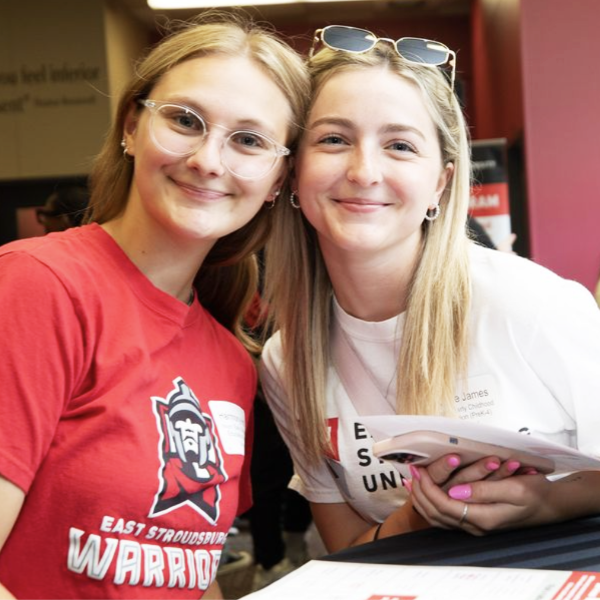
athletic training students

Vision Statement

The VISION of the CaATe-accredited Athletic Training Program at East Stroudsburg University of Pennsylvania is to:

  1. Be a leading student-centered athletic training program with faculty, clinical preceptors, students and affiliated staff sharing the responsibility for academic, professional and personal growth.
  2. Explore and integrate innovative approaches to enhance learning.
  3. Continually develop and adapt the educational curricula based upon evolving educational and credentialing standards.
  4. Be a program whose values of scholarship, professionalism, inclusivity and service are evident and pervasive among all of its members.
  5. Expand our pedagogical approaches to accommodate diversity in learning styles.
  6. Maintain a sound economic position through optimum enrollment and the exploration of external support.

Career Development at ESU

We'll help you launch your career. Support services are available through the ESU Career Development Center. The center offers a variety of internship opportunities, career planning, and employment services to all ESU students and alumni.

Become a Warrior

Large CTA Image Alt Tex

Explore the variety of careers possible with a degree in Athletic Training from ESU.

  • Card Image

    Undergraduate Admissions

    #
  • Card Image

    Scholarships & Aid

    #
  • Card Image

    Department of Athletic Training

    #

Contact Us

Campus Address

Koehler Fieldhouse 1st Floor
(570) 422-3231

Department Chair, Athletic Training

Dr. Gerard Rozea
grozea@esu.edu
(570) 422-3065