Title IX of the Education Amendments of 1972 is a federal civil rights law that states "No person in the United States shall, on the basis of sex, be excluded from participation in, be denied the benefits of, or be subjected to discrimination under any education program or activity receiving federal financial assistance."
The U.S. Department of Education, which enforces Title IX, has long defined the meaning of Title IX’s prohibition on sex discrimination broadly to include various forms of sexual harassment and sexual violence that interfere with a student’s ability to equally access educational programs and opportunities.
Report Sexual Misconduct to the Title IX Office
Details on how to report including a link to a web-based reporting form and frequently asked reporting questions.
The ESU Title IX Office, following these federal guidelines, promotes a campus community free from sex-based discrimination through campus-wide collaborative prevention and education efforts and maintains an equitable process to address violations of the ESU Title IX Policy.
Any individual, including a third party, may make a report concerning sexual misconduct. Behavior prohibited by this policy includes, but is not limited to, the following:
Treating someone unfavorably because of that person's sex, including the person's sexual orientation, gender identity, or pregnancy status.
This includes any sexual act directed against another person, without the Consent of the Complainant, including instances where the Complainant is incapable of giving Consent. Sexual Assault may be one of the following categories:
Sexual Penetration Without Consent - Any penetration of the mouth, sex organs, or anus of another person, however slight by an object or any part of the body, when Consent is not present. This includes performing oral sex on another person when Consent is not present.
Regulatory Sexual Contact Without Consent - The intentional touching of another person’s clothed or unclothed body parts without consent, for the purpose of sexual degradation, sexual gratification, or sexual humiliation.
Non-Regulatory Sexual Contact Without Consent - The intentional touching of another person’s genitals, breasts, buttocks, or anus, when consent is not present for any purpose other than sexual degradation, sexual gratification, or sexual humiliation or touching a person with one’s own clothed or unclothed body parts without consent, for any purpose. This includes contact done directly or indirectly through clothing, bodily fluids, or with an object. It also includes causing or inducing a person, when consent is not present, to similarly touch or fondle oneself or someone else.
Statutory Sexual Assault – The age of consent for sexual activity in Pennsylvania is 16. Minors under the age of 13 cannot consent to sexual activity. Minors aged 13-15 years old cannot consent to sexual activity with anyone who is 4 or more years older than they are at the time of the activity. Minors aged 16 years of age or older can legally consent to sexual activity, as long as the other person does not have authority over them as defined in Pennsylvania’s institutional sexual assault statute.
Regulatory Quid Pro Quo Sexual Harassment - An Employee conditioning the provision of aid, benefit or service of the University on an individual’s participation in unwelcome sexual conduct.
Non-Regulatory Quid Pro Quo Sexual Harassment - An Official, Volunteer or Student conditioning the provision of aid, benefit or service of the University on the individual’s participation in unwelcome sexual conduct.
Regulatory Hostile Environment Sexual Harassment - Unwelcome conduct, on the basis of sex, that a reasonable person would determine is so severe, pervasive, and objectively offensive that it effectively denies a person equal access to the University’s Education Program or Activity.
Non-Regulatory Hostile Environment Sexual Harassment - Unwelcome conduct, on the basis of sex, that a reasonable person would determine is sufficiently severe, pervasive, and objectively offensive that it unreasonably interferes with, limits, or deprives an individual from participating in or benefiting from any educational, employment, social or residential program in offered connection with the University.
Engaging in sexual behaviors directed toward or involving another person or use of another person’s sexuality for purposes of sexual gratification, financial gain, personal gain or personal advantage when Consent is not present. This includes, but is not limited to, the following actions, including when they are done via electronic means, methods or devices:
- Sexual voyeurism or permitting others to witness or observe the sexual or intimate activity of another person without that person’s Consent;
- Indecent exposure or inducing others to expose private or intimate parts of the body when Consent is not present;
- Recording or distributing information, images or recordings of any person engaged in sexual or intimate activity in a private space without that person’s Consent;
- Prostituting another individual;
- Knowingly exposing another individual to a sexually transmitted disease or virus without that individual’s knowledge; or
- Inducing incapacitation for the purpose of making another person vulnerable to non-consensual sexual activity.
Means engaging in a course of conduct directed at a specific person that would cause a reasonable person to:
- Fear for their safety or the safety of others; or
- Suffer substantial emotional distress.
A course of conduct is when a person engages in two or more acts that include, but are not limited to, acts in which the person directly, indirectly, or through third parties, by any action, method, device, or means, follows, monitors, observes, surveys, threatens, or communicates to or about a person in a prohibited way, or interferes with a person’s property.
Stalking includes the concept of cyberstalking, in which electronic media such as the Internet, social networks, blogs, cell phones, texts, email or other similar devices or forms of contact are used to pursue, harass, or to make unwelcome contact with another person in an unsolicited fashion.
Dating Violence – Includes any violence committed by a person: (A) who is or has been in a social relationship of a romantic or intimate nature with the Complainant; and (B) where the existence of such a relationship shall be determined based on a consideration of the following factors: (i) the length of the relationship; (ii) the type of relationship; and (iii) the frequency of interaction between the persons involved in the relationship. Dating violence includes, but is not limited to, sexual or physical abuse or the threat of such abuse. Dating violence does not include acts covered under the definition of Domestic Violence.
Domestic Violence – Includes any violence committed by a current or former spouse or intimate partner of the Complainant, by a person with whom the Complainant shares a child in common, by a person who is cohabitating with or has cohabitated with the Complainant as a spouse or intimate partner, by a person similarly situated to a spouse of the Complainant under Pennsylvania’s domestic or family violence laws or by any other person against an adult or youth Complainant who is protected from that person's acts under the domestic or family violence laws of Pennsylvania.
The East Stroudsburg University Title IX Office
Exists to ensure that anyone who experiences sex-based discrimination or sexual misconduct is provided with the supportive measures, resources, and accommodations available at the University and in the community. The office is also responsible for investigating these complaints made by students or employees in an effort to stop the activity, put measures in place so that it does not happen again, and to provide a remedy to the individual(s) who was harmed.
Notice of Nondiscrimination
East Stroudsburg University is committed to complying with Title IX and is strongly committed to maintaining a positive learning, working and living environment for all and assuring it’s educational and employment environment is free from unlawful discrimination or harassment. The University does not discriminate on the basis of race, color, religion, creed, national origin, sex, sexual orientation, gender identity, gender expression, genetic information, marital status, age, disability, pregnancy, any other protected category under applicable, local, state or federal law, or status as a disabled veteran, a Vietnam era veteran or other covered veteran in admission and access to, and treatment and employment in, its educational programs and activities. The University will not tolerate acts of discrimination, harassment or retaliation against or by any employee or student.
The University complies with Title IX of the Education Amendments of 1972 (“Title IX”) and its underlying regulations, which prohibit discrimination on the basis of sex in education programs and activities. Further, the University complies with the Americans with Disabilities Act Amendments Act (ADAAA), Section 504 of the Rehabilitation Act of 1973, Title VII of the Civil Rights Act of 1964, and other applicable statutes and University policies.
Contact Us
Campus Address
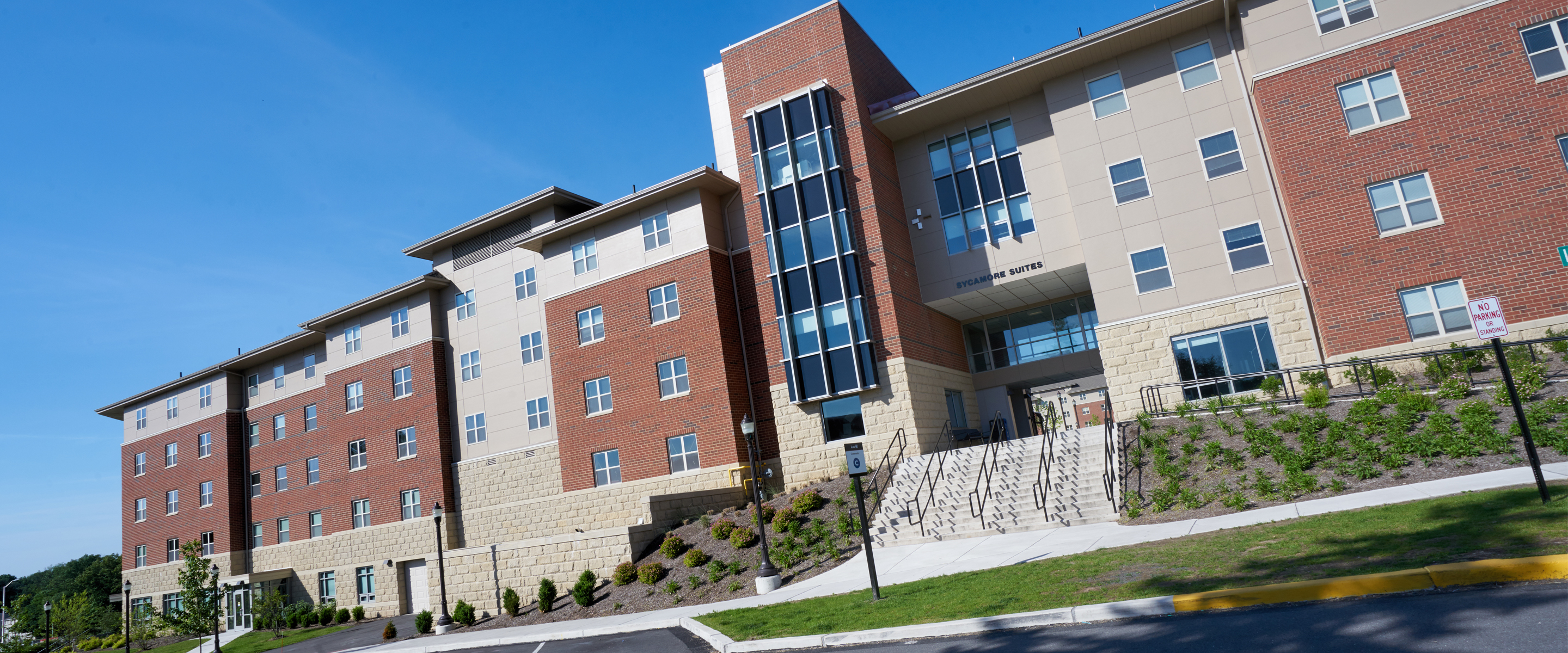
Sycamore Suites, Lower Level, 011
(570) 422-2277
Equal Opportunity and Title IX Coordinator
Christopher S. Bean
titleixreport@esu.edu